Gin and Tonic Club

Gin and Tonic Club

I have been trying to get this post done for ages.  Like ages.  It has been months since we spoke to Fever Tree and started working together (they came us some free stock).

I also think I have made this blog (in some form) before too, I just don’t know where I saved it so let’s start again.

Right from the outset, when we call it Gin Club we usually mean “Glasgow Gin with some form of mixer in it Club”.  We rarely offer up the Gins without something to compliment it.  We do give people the chance to taste Gin neat but generally when we are running the nights we want people to enjoy the Gin the same way they would at home.

Lots of people give you the “nope” face when you offer them a straight taste of Gin, as in the past it’s not the most enjoyable thing to taste neat, which again stems from the fact they have only accidently drank Gordon’s straight, as students or at the end of the night when the mixer and ice has run out and it’s the only option.

We at Gin Club can assure you a good Gin can be drank neat, but we usually always have something in it.  With the exception of the EG night with the dry martinis using Cannonball, but that ended differently so we won’t be doing that in a hurry.

Right so let’s talk about Gin and Tonic club.

When people say “I don’t like Gin” we always say “nope you don’t like Gordon’s Gin and Schweppes Tonic.  Generally out of a tiny wee glass, a thin slice of lemon and one cub of ice.  That’s enough to put everyone off.

But there is something that will change your mind even with the dreaded Voldemort (I love how Voldemort is in the MS Word dictionary) of Gins Gordon’s.

Fever Tree!! Ta Dah…

Fever Tree has saved Gin for a lot of people.  We use it in pretty much all our drinks.  I should halt for a minute and say there are many other artisan tonics out there too, but instead of picking up a Schweppes pick up a few bottles of Fever Tree first, it really does change the whole Gin and Tonic game.

Those of you who come to Gin Club will have no doubt read and been preached to by Stuart and I about Fever Tree, but for those who haven’t read our Gin tasting guide check it out word for word below (yes I’m lazy, it’s my work lunch break):

Fever-Tree Indian Tonic Water launched in the UK in early 2005, the brand name chosen as a Fever Tree is the name for the cinchona tree, the bark which gives us Quinine.  One of the main uses of Quinine is in the treatment of Malaria, one of Malarias main symptoms is Fever, hence the name the fever tree.  Using Rwanda Congo Cinchona Bark and blended with spring water along with eight botanicals, such as: marigold and a bitter orange from Tanzania.

Fever trees have a range of products which they also make from Low Calorie tonic to their own Ginger Ale.

Right then let’s go through some mixers and Gins and their merits.

Fever Tree Tonic:

For which Gins: All of them

Notes: The standard amazingness which is Fever tree a must for all Gin’s and Tonic.  With maybe one exception of Gin (although I disagree but the distillers swear on it, more later).

Others: This also comes in Low Calorie, and a Lemon Tonic.
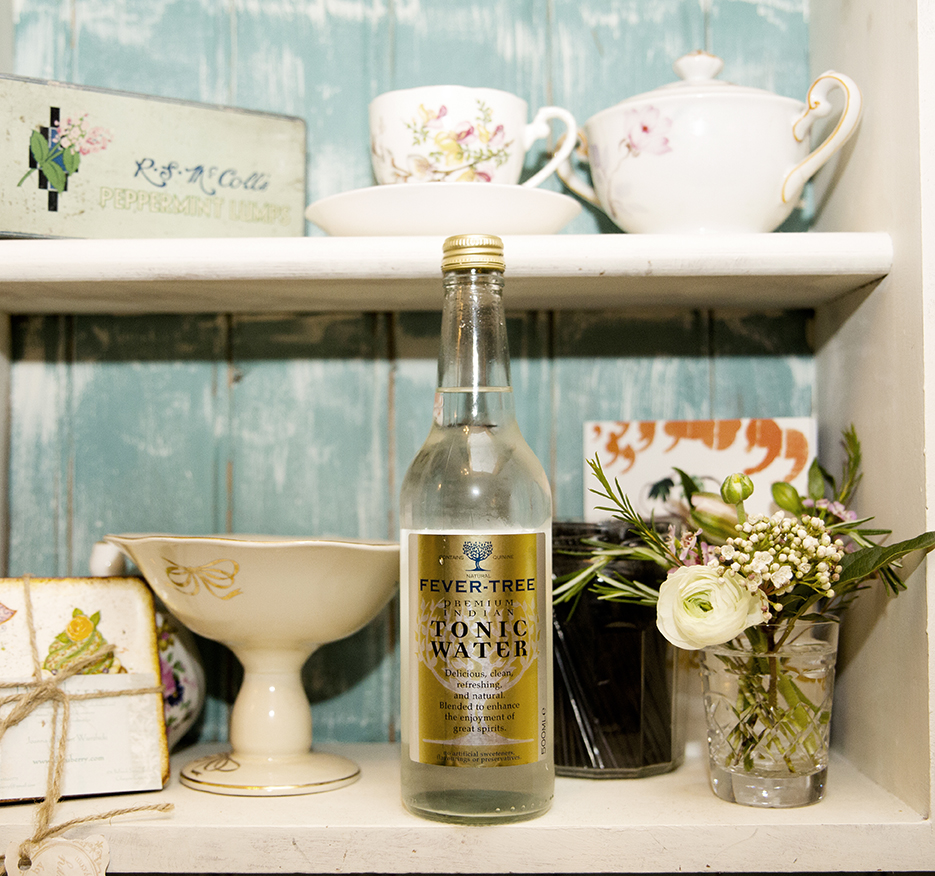
32

Fever Tree Mediterranean Tonic:

For which Gins:  Anything Salty or Olivey, Good in Gin Mare and EG Seaside

Fever Med

Fever Tree Ginger Ale:

Gins: Anything with a spice that ginger can help with.  Ophir.

Others: Ginger Beer and light of both.  We used the Ginger beer in Firkin Gin last month.
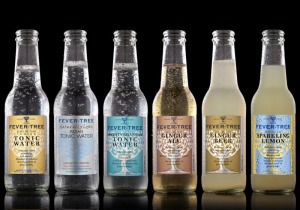
Fever All

Schweppes Tonic:

Gins: Experiment with Fever Tree first but according to Tony at Strathearn Distillery he says Schweppes is the perfect tonic of the Heather Rose.

Others: Load but I can’t be arsed.

Summerhouse Walter Gregory’s Tonic:

Gins:  This artisan Tonic has an almost minty taste and works well with Daffy’s Gin.

Others:  Summerhouse do a host of artisan Lemonades.
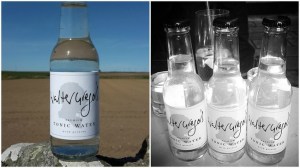
Summerhouse

1724 Tonic Water:

Gins: I haven’t experimented with one taste group but this is a perfect product which compliments all Gins, Stuart loves it and he usually goes for the savoury Gins.
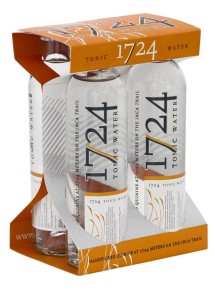
1724

Supermarket Home Brand:

Notes: So this sound stupid but I generally find that Tesco, Morrison’s, Asda’s tonic own Tonic waters perform better across the Gin board to Schweppes.  Experiment.  I’m a fan of Waitrose own to be honest.

Bottlegreen Elderflower Tonic:

Notes: Bottle Green do a range of products, their standard tonic is lovely   across all Gins.

Gin: All

Others: They do things in pink, pomegranate.
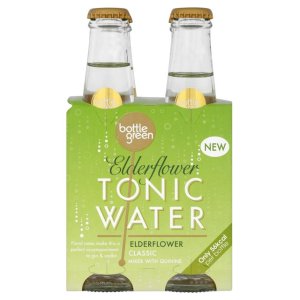
Bottlegreen

Fentimans Tonic:

Gins:  For the floral Gins

Notes:  Not my tonic of choice, I love the Fentimans brand and adore the Curiosity Cola but it’s too sweet and brings out floral notes in Gins which are already too flowery.  They actually did a bottle of Gin and Tonic Mix with Bloom Gin.
Fentimans

Septembers Gin Club

Right I know this is late as always.  It’s fair to say we have been mental (Moich – if you’re from Perthshire), but here goes.

So who decided that Graeme should get married head to Sri Lanka for three weeks and on the week he came back should do a Gin Club.  He did (should I say I did), twat!  That’s a sure fire way to ruin yourself.  Where was Caldow you ask, “Busy” ahaha.  Nonsense, he doesn’t know the meaning of it.  Ticketmaster sounds easy J

So Septembers Gin club was an interesting one (they all are).  We had one left field choice (which we will describe later), a choice to allow the Gin Clubbers to reach for something a bit more special when buying a standard London Dry other than Gordon’s or Bombay and a new one which tasted like the seaside.

So the first Gin we featured is one which currently has a bit of a PR problem, and this is a crying shame.

Plymouth Gin

The name Plymouth Gin is a protected brand, much like Scotch Whiskey (in that it has to come from certain casks and be made here) or Jersey potatoes which have to be made in Jersey.  It’s actually one of few Gins which have a protected name.

Plymouth Gin is essentially a London Dry in taste with a slight degree of difference that most wouldn’t taste once they fire in garnish and tonic, but as it’s made traditionally in Plymouth it gets its own Gin type, Plymouth Gin and not London Dry.

Back in the day when Plymouth was a famous naval town seeing the likes of Nelson et al there were over eight distilleries catering and facilitating the term “drinks like a sailor”, now though there is only one.

Plymouth is produced by the Black Friars Distillery. The Black Friars Distillery is the only remaining gin distillery in Plymouth, in what was once a Dominican Order monastery built in 1431, the distillery being one of the UK’s eldest in UK, dating back to 1793.

The Brand has so much history and is such a great tasting Gin for the house that I’m constantly annoyed it gets bypassed by most in pubs or the supermarket and people opt for Gordon’s or Bombay thinking its better.  The brand really has an image problem.  But Barman love it, it’s a great cocktail dry Gin, it tastes great in the home and for some reason Morrison’s always has it on special so you can get an amazing dry Gin for the same price as Bombay or a big bottle of Gordon’s.

It has seven botanicals – juniper, coriander, sweet orange, cardamom, angelica and orris root that are redistilled with pure grain spirit. For a Gin you don’t get the dominance of Juniper instead its almost sweet, with orange and cardamom giving it a soft fruity yet spicy finish.

Please reach for this instead of your traditional choices.  Plymouth should be in your drinks cabinet or globe J

We served it as G&T served with Fever Tree, garnished with Strawberry

 IMG_9528  IMG_9552 IMG_9599  IMG_9589

Edinburgh Seaside

So we have featured Edinburgh before and we can safely say the first time when they brought the Cannonball and we made Dry Martini’s along with bottles of all their other products, it was a pretty ruckus night.  Caldow had to carry women out in cuddieback form.

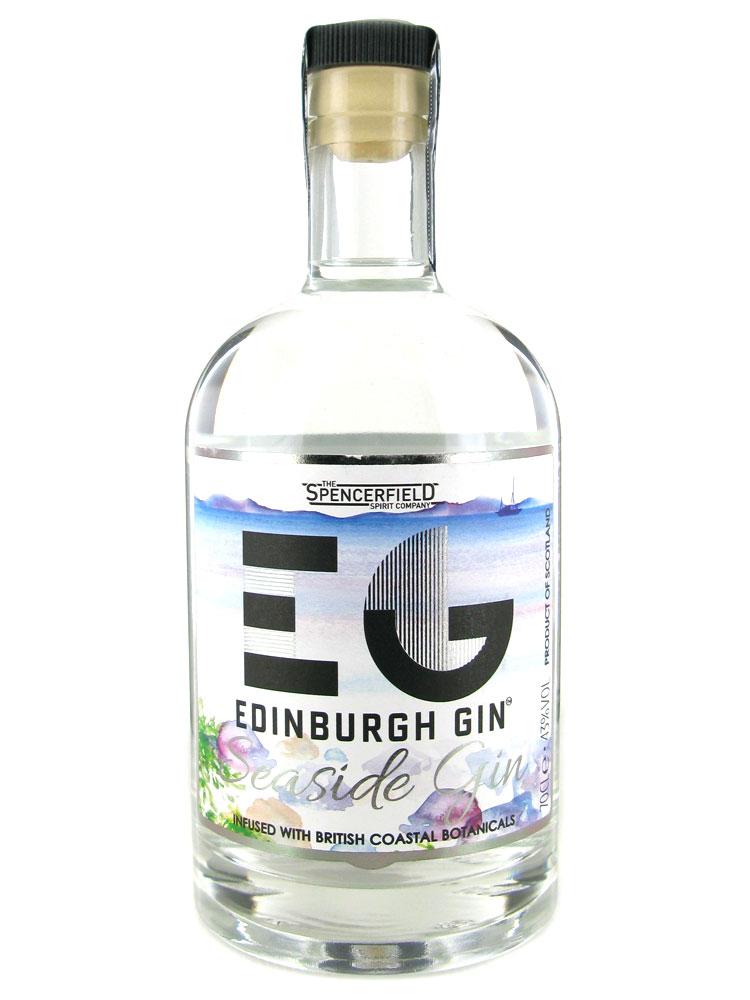
Edinburgh Gin has been constant innovators in the world of Scottish Gin.  For some time the Gin was bottled down south but in summer 2014 Edinburgh Gin move the distillation process to the capital.  The Edinburgh Gin range is rather impressive with Raspberry Gin (which we have been told are Rasps from Perthshire) and Elderflower Gin (and other flavoured gins); we featured the Cannonball Gin in February, this time though we are using the Edinburgh Seaside Gin.

Head Distiller David Wilkinson and the team scowered the coastline in search of the perfect ingredients to give a Scottish seaside flavour. After experimentation, they settled on a combination of seaweed, scurvy grass and ground ivy combined to the other Edinburgh Gin Botanicals making a slightly sweet yet refreshingly minerally taste, you can taste the salt.

We at Gin Club think this is the best thing they have made.  It is a truly unique product.  I know they have a huge product list, but the liqueurs are more like Gin Crack…  As in “here come and try this” to get you into it.  They are great and in fairness Mrs Macdonald drinks them all the time, but the Seaside is their best innovated Gin to date.  Well done Mr Wilkinson.

Thanks to Finlay and Ruairidh for popping down and the patter, and drinking hehe, no ruined Gin Clubbers from the mini still this time.

We served it as a G&T with Fever Tree, but to get the most out of it you should use the Mediterranean Tonic and a lemon peel twist.

IMG_9500

Whitley Neill

So we have Mr Niell before but this goes along the same lines and the Plymouth choice.  It’s in all the supermarkets and the usual retail price is £22-£25 which is around the same as Bombay, please pick this more (unless of course Bombay email Gin Club tomorrow saying “please promote us here’s eight bottles”).

Whitley Neill is distilled near Birmingham, in an antique copper pot still called ‘Constance’ who is over 100 years old. Using exceptionally pure water along with nine botanicals, which are carefully selected to ensure that they are of the highest quality. Whitley Neill’s tagline is “Made in London and Inspired by Africa” which is not only an insight to its creator Johnny Neill who is married to an African woman but also describes some of the botanical choices. In this line up are cape gooseberries and baobab fruit along with more traditional ones such as juniper, coriander, lemon & orange peel, angelica root, cassia bark and orris root.

To taste you get juniper and citrus notes first followed by a subtle spice and complex finish. It really does not disappoint on the “different” quote as you do get more than you normally get from a London Dry.

We served it as a G&T served with Fever Tree, garnished with Plum.

IMG_9608

Firkin Gin

So I mentioned earlier about our left field choice.  By this I’m not saying “this is our crap option” quite the opposite it’s the different choice, by different I mean greatly different (not sure if I’m showing different in a good light here or not).

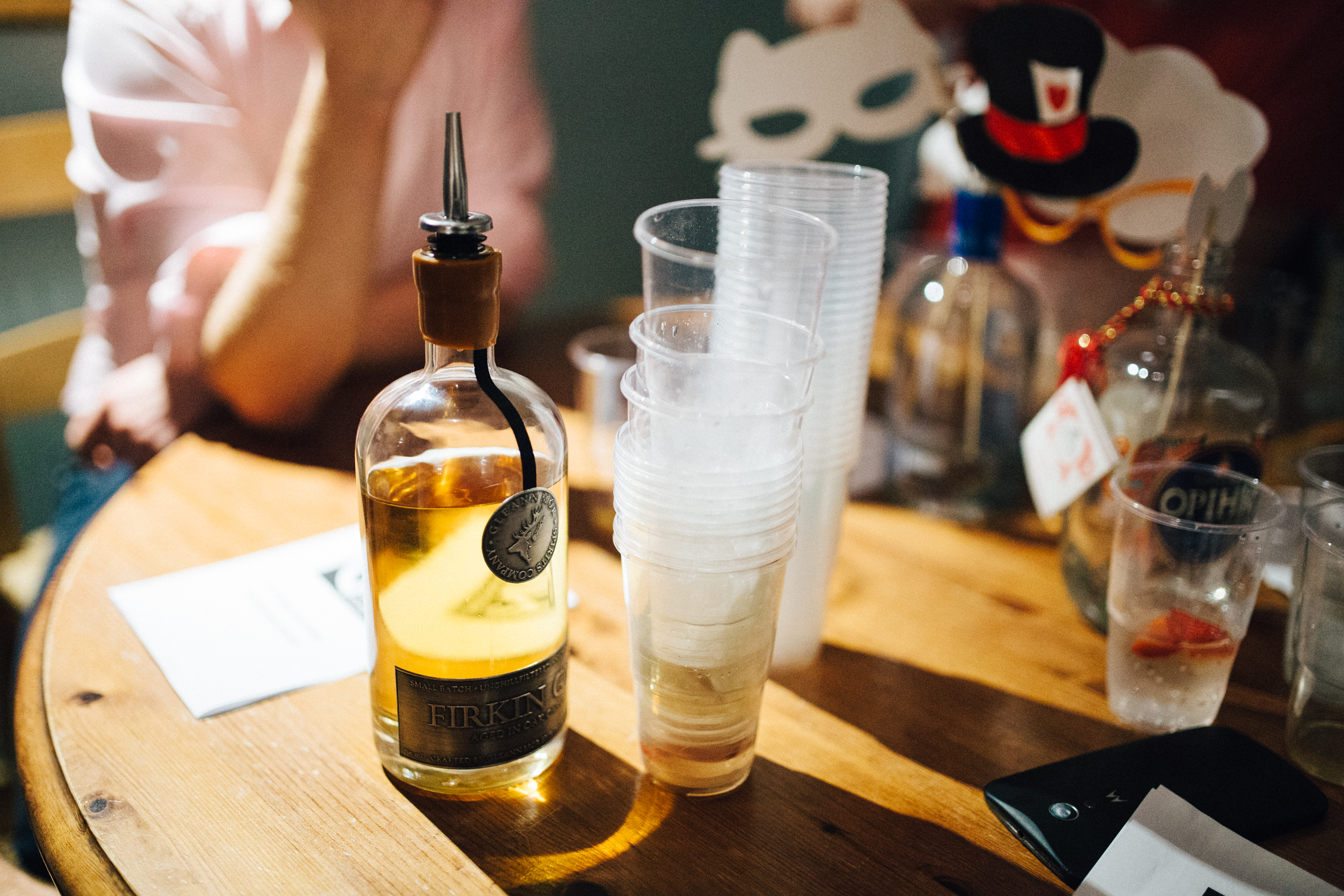
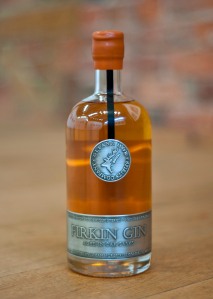
FIRKIN Gin was launched in April 2015 by Gleann Mor Spirit Company.  Gleann Mor are mainly a Whiskey company, this is their successful Gin experiment.  Firkin Gin has a distinct whiskey look from the American oak whisky casks, it is rested in.  I really need to learn more about the brand and the history of Gleann Mor Spirits, they seem to have a great foot hold in the rare bottled Whiskey world.  Yum yum yum.  Gleann Mor, feel free to bring some along J

It really confused my senses at first.  As when you crack open the bottle you think “ohh Whiskey” but it’s not, it just looks and at first smells like one.  We served it with Tonic and orange peel which was wrong, completely wrong.  Yeah it worked for some, but as soon as you swapped the tonic for ginger beer or ale and the orange peel.  Different drink altogether.  Like Jerry Maguire “you complete me” says the Firkin to Ginger.  So much more was gained from the ginger combination.

The ingredients are a traditional line up with juniper, coriander seed, angelica root, and orris root all added into the still.  The Gin is 4 times distilled and bottled at 46%.  There is a good hit of juniper on the nose, followed by mint and lemon peel, then lemon barley sweetness develops followed by flint and elderflower;  a lovely balance between sweetness and crisp aromas.  On the palate, fudge-like sweetness with clean eucalyptus, then more mint.

IMG_9607IMG_9475

Right so that was the round up from last week.

Some thanks to Firkin (FIRKIN), to Whitley Neill, Plymouth and Edinburgh Gin.

Thanks to the Tea Room for the cakes, which we will get the recipe and post btw.

Thanks to Blonde Bridget for the vegan, and all other allergen cake.

Thanks for coming.

Plymouth and Whiteley Neill

So again we are doing this backwards but tonights Gins are:

WHITLEY NEILL

Whitley Neill is distilled near Birmingham, in an antique copper pot still called ‘Constance’ who is over 100 years old. Using exceptionally pure water along with nine botanicals are which are carefully selected to ensure that they are of the highest quality. Whitley Neill’s tagline is “Made in London and Inspired by Africa” which is not only an insight to its creator Johnny Neill who is married to an African woman but also describes some of the botanical choices. In this line up are cape gooseberries and baobab fruit along with more traditional ones such as juniper, coriander, lemon & orange peel, angelica root, cassia bark and orris root.

To taste you get juniper and citrus notes first followed by a subtle spice and complex finish. It really does not disappoint on the “different” quote as you do get more than you normally get from a London Dry.

Serving Suggestion: G&T served with Fever Tree, garnished with Plum

PLYMOUTH

So at Gin Club we often get fancy unheard of Gins but one thing we are keen to let you try are Gins that you can get in many places instead of reaching for the Gordon’s or the Bombay.  The name Plymouth Gin is a Protected branding which is any Gin made in Plymouth in tradition way.  Once there were many now there is only one. Plymouth, which is produced by the Black Friars Distillery. The Black Friars Distillery is the only remaining gin distillery in Plymouth, in what was once a Dominican Order monastery built in 1431, the distillery being one of the UK’s eldest, dating back to 1793.

The Brand has had a hard time in the past as it was abused by their parent company and as such the brand has suffered an image problem, lets fix that!

It has seven botanicals – juniper, coriander, sweet orange, cardamom, angelica and orris root that are redistilled with pure grain spirit. For a Gin you don’t get the dominance of Juniper instead its almost sweet, with orange and cardamom giving it a soft fruity yet spicy finish.


Serving Suggestion: G&T served with Fever Tree, garnished with Strawberry

Septembers Gin’s – FIRKIN & Edinburgh Seaside

So this month we are doing something a bit different.

The main reason being Stuart and myself have been busy as hell the whole of September and we haven’t had a chance to do the blogs the same, hence all the “ghost blog” posts for the Great British Bake Off.  But that will happen when you gallivant off on something called Honeymoon.

Right so this time we are doing the blogs in reverse order, we usually do a blog for each featured Gin, then post a small blog about how we served it after it.  But we are doing the latter first.

So our first two Gins for This month are:

FIRKIN

FIRKIN Gin was launched in April 2015 by Gleann Mor Spirit Company.  Before progressing any further Gleann Mor are mainly a Whiskey company, they specialise in bottling rare whiskeys.  This is the Gleann Mor distilleries foray into Gin and can I just start by saying brilliant start folks.  So Frikin Gin has a distinct whiskey look, it is golden brown and this is caused by the American oak whisky casks, it is rested in.

The ingredients are a traditional line up with juniper, coriander seed, angelica root, and orris root all added into the still.  The Gin is 4 times distilled and bottled at 46%.  There is a good hit of juniper on the nose, followed by mint and lemon peel, then lemon barley sweetness develops followed by flint and elderflower;  a lovely balance between sweetness and crisp aromas.  On the palate, fudge-like sweetness with clean eucalyptus, then more mint.

I find the Gin straight better than in a G&T as it gives a good mix of Juniper and Toffee type flavors.  To me tonic takes the Juniper away however, for Gin Club we are keeping the tonic or possibly attempting another mixer.  Trust me the flavor wont be lost, I think I have drank too much Gin now so Juniper gets lost unless its above 40% 🙂

Serving Suggestion: G&T served with Fever Tree, garnished Orange peel (maybe Ginger beer)

firkin

EDINBURGH SEASIDE

Edinburgh Gin have been constant innovators in the world of Scottish Gin.  For some time the Gin was bottled down south but in summer 2014 Edinburgh Gin move the distillation process to the capital.

The Edinburgh Gin range is rather impressive with Raspberry Gin (which we have been told are Rasps from Perthshire) and Elderflower Gin (and other flavoured gins), we featured the Cannonball Gin in February, this time though we are using the Edinburgh Seaside Gin.

Head Distiller David Wilkinson and the team scowered the coastline in search of the perfect ingredients to give a Scottish seaside flavour. After experimentation, they settled on a combination of seaweed, scurvy grass and ground ivy combined to the other Edinburgh Gin Botanicals making a slightly sweet yet refreshingly minerally taste, you can taste the salt.

Its a really strange taste at first.  Its like when someone lets your try potatoes cooked in sea water.  Its strange but brilliant.  This is a truly unique approach to adding flavor to a spirit which inst just making it another fruit infused Gin.

Serving Suggestion: Served with Fever Tree Tonic (possibly Mediterranean Tonic) & lemon twist.

edinburgh-seaside-gin

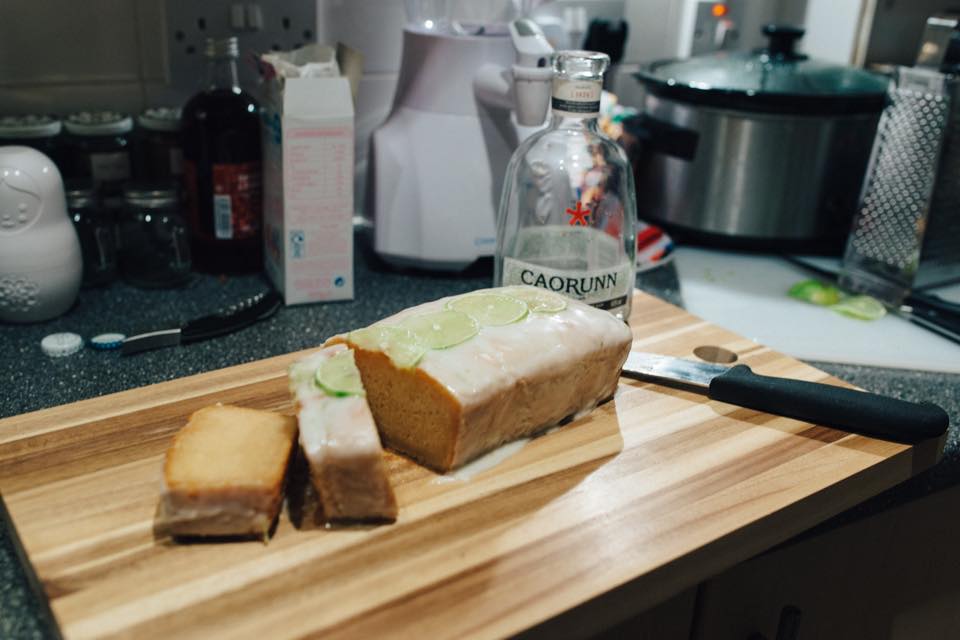
Bridget’s Vegan Gin Cake

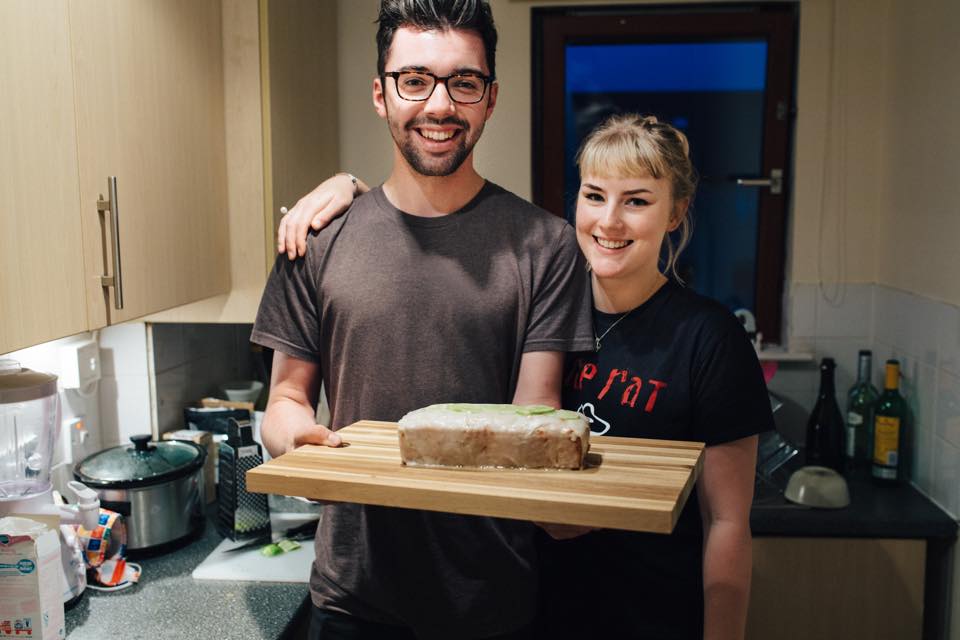
So our mate Bridget (whom we love as we used to use her Tinder and swipe on the most horrific humans just for a laugh), has designed a wee Vegan Gin Cake (loaf) for us.  Bridget used to working in the Hidden Lane Tea Room where we hold most of our events.  Anyway here goes Bridget the Midgets cake:

Bridget cake3 Bridget cake2

So, vegan and gluten free grapefruit and gin loaf with a lime drizzle. (I scale in cups just from research for vegan cakes tend to come from America!)

Ingredients for cake:

3/4 cup gluten free plain flour

1 cup gluten free self raising flour

3/4 cup raw cane sugar

2tsp gluten free baking soda

1/2 cup coconut oil (melted)

1 1/4 cup almond milk Juice

zest of a grapefruit

Gin syrup:

Juice and zest of a grapefruit 3tbsp gin (Caorunn in this case) of your choice 1/2 cup caster sugar

Lime frosting:

Juice and zest of a lime Tsp gin of your choice 1/2 cup icing sugar (I bought all my ingredients apart from the gin from Roots and Fruits who are a great local source for natural foods)

Instructions:

Preheat the oven to 180c and grease a 10inch cake tin loaf with a smidge of coconut oil. In a large bowl, mix together the flours, sugar and baking soda.

Once combined, stir in the melted coconut oil, milk and grapefruit and mix well looking out for lumps.

Pour into the prepared loaf tin and bake for 50 mins (but check and 40 just to be safe, can never trust oven times!)

Once cooked, remove from the oven and while still hot and mix together the gin syrup ingredients in a small bowl. Then pour on-top while it’s still in the tin.

Once cooled and out the tin. Mix together the lime, gin and icing sugar till thick and shiny (you may want to add more lime or sugar to your preference) and dollop on-top allowing it to drop down the edges.

Decorate how ever you fancy (I cut some wafer thin lime slices but grapefruit slices would work well too).

Bridget cake

Special Gin Club Cupcakes

Right so this is my first attempt at one of these ghost blog posts where you set the timer and boom it comes out ahahahaha, Illuminati type stuff… Or not, as its all a myth!

Anyone this weeks Great British Bake Off post comes from our friends at the Hidden Lane Tea Room.  Everything month they bake for us special little Gin themed cupcakes.  I say they its Kirsty the owner whos doing the baking for us (except this week when it was young Holly Genero -aye thats the woman from Die Hard I know but I’ve called her that for years, now shes Yoga Hols).

So here it is , our Gin Club Gin Mojito Cupcakes

Ingredients:

Strawberry Syrup:

250g caster sugar

250ml of water

100g strawberries, diced

6 dried juniper berries

50g fresh mint leaves, chopped

Cupcakes

120g plain flour

140g caster sugar

1 ½ tsp baking powder

pinch of salt

40g unsalted butter, at room temperature

120ml whole milk

1 egg

¼tsp vanilla extract For the icing

250g icing sugar, sifted

80g unsalted butter, at room temperature

25ml whole milk

a couple of drops of mint extract

A couple of drops of pink food colouring

Method:

First thing that you need to do is make a strawberry gin mojito syrup.

Put 250g of caster sugar in a pan and add 250ml of water. Add 100g (roughly!) of diced strawberries and 6 crushed dried juniper berries.

Heat on a medium heat until bubbling and the sugar has fully dissolved. Take off the heat and stir in the chopped mint leaves. Leave to cool.

Now you need to make your cupcakes. We use a vanilla cupcake batter.

Preheat the oven to 170°C (325°F) Gas 3. Put the flour, sugar, baking powder, salt and butter in a freestanding electric mixer with a paddle attachment (or use a handheld electric whisk) and beat on slow speed until you get a sandy consistency and everything is combined.

Whisk the egg, vanilla extract and milk together in a separate bowl for a few seconds, then pour half into the flour mixture and beat until just incorporated (scrape any unmixed ingredients from the side of the bowl with a rubber spatula).

Add the rest of the milk mixture and continue mixing for a couple more minutes until the mixture is smooth. Do not over mix. Spoon the mixture into the paper cases until two-thirds full.

Now this is where the cupcakes differ from a usual vanilla cupcake! Into each cupcake add a few of the strawberry pieces that have been soaking in the syrup. Try not to add too much syrup at this stage, bake in a preheated oven for 20–25 minutes, or until light golden and the sponge bounces back when touched. (If you are making mini cupcakes they will only take 13-15minutes) A skewer inserted in the centre should come out clean.

Whist the cupcakes are still hot spoon over a couple so teaspoons of the strawberry syrup and allow it to soak into the cake. Leave the cupcakes to cool slightly in the tray before transferring onto a wire cooling rack to cool completely.

Meanwhile you can make the icing. Beat the icing sugar and butter together in a freestanding electric mixer with a paddle attachment (or use a handheld electric whisk) on medium-slow speed until the mixture comes together and is well mixed. Turn the mixer down to slow speed.

Combine the milk, mint extract and food colouring in a separate bowl, then add to the butter mixture a couple of tablespoons at a time. Once all the milk has been incorporated, turn the mixer up to high speed. Continue beating until the frosting is light and fluffy, at least 5 minutes. The longer the frosting is beaten, the fluffier and lighter it becomes. When the cupcakes are cold, decorate with the icing and drizzle with remaining sugar syrup, Enjoy!cupcakes

Strane / King of Soho / Broker’s & Boodles

Like everything this week Stuart and I are behind, all because of that wedding thing at the weekend.  And many of you will be surprised that it was me (Graeme) marrying a woman and not Stuart like most people thought.  Because of this little event the Gin posts for this month’s Gin Club will have to be lumped into one.  But they will by no means be lacking in fabulous writing (just in grammar and spelling and punctuation – see what I done there)…

First up (and this is in no list of anything we have):

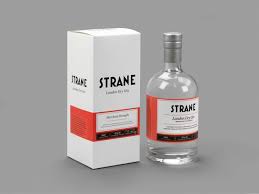
Strane (London Dry)

strane

Strane is made by and at Smögen Whisky, a small craft distillery on the Swedish west coast, Hunnebostrand. The distiller has mainly been producing Whiskey since 2010; however they launched Strane in spring 2014.  The Gin is made in a 100 litre pot still, (which by the way is small), hence the small bottles and why we are so happy to get them along.  Strane claim that even though (and you can taste this) the still is small they; “take all the more care of each centilitre of what we do make, using plenty of high quality botanicals for every charge of the still”

Strane use a blending process to the distillation which allows them to create all three of their products, I am keen to learn more of the process involved in this “blending” as I wish to know which set distilutes are blended, and I see it like a basic curry sauce which a chef then uses to create the unique ones.

When I think about Strane I think about it getting made (like many Gins we feature) with a lot of TLC and experimentation.  I imagine that as it’s not an industrial process that not one batch tastes the exact same as another, which we love.  Stuarts buying criteria for a new Gin is often “does the label look like it has been stuck on by hand”?

All the Strane gins use the same botanicals: juniper berries, coriander seeds, lemon rind and flesh, lime rind, almonds, basil, garden mint, sage, cinnamon bark, liquorice root and then two others which they won’t tell us about.  One of local to the area and one is unknown but connects to the armed merchant shipping trade.

At Gin Club we are featuring the Strane Merchant Strength 47.4 %.  This is a very interesting “little Gin”, it’s not little, it’s huge just made in small quantities so the mix is bang on.  I have said this many times but it is a Gin that is made with TLC and it’s rather smooth so you can tell it’s had some love.  The taste is led by juniper (it is a Gin), coriander seeds and herby but you also get a wee lick of mint.

We will be serving it as a G&T with Fever Tree garnished with Lemon Peel.

King of Soho

kingofsoho

So Stuart has been after this Gin for a while so I politely took the brand rep out for lunch and now we have it.  I have known about the Gin for some time and I didn’t connect it at all with Paul Raymond the “King of Soho”.  Thank you Paul, if it wasn’t for you my teenage years would have been different, the 1990s might have been more like the 1950s.  Stuart wouldn’t have been able to pay me for lifts to Perth in top shelf mags for sure J

Anyway that’s where the Gin gets its name.  Paul’s son Howard wanted to capture the spirit of Soho and in tribute to his father developed a drinks brand.

King of Soho is a traditional London Dry made in London and by a mysterious “11th generation master distiller” at Thames Distillers in two small pot stills.    It is crafted using traditional methods and for purity it is quadruple distilled.  The Gin contains 12 botanicals; Juniper (it is a Gin), coriander, citrus (which I read from our friends at Gin Foundry are mainly grapefruit peel), angelica root and cassia bark (yes this doesn’t add up to 12, I am working on the others).  That’s all I will quote from our mates at Gin Foundry on this topic though…

On the nose King of Soho is very well rounded.  By that I mean it smells like a classic Gin there is no massive hits of anything which draws you away from smell of Juniper which is what a traditional London Dry should do.  I have always been better at the nosing side of things than the taste or texture, but like I said its juniper all the way here with coriander coming through.  When you drink it those two small flavours come through straight away (but I need to stress this is a traditional London Dry so it’s meant too).  You also get the citrus coming through.  A lot of people get a punchy bite of pepper which could be the cassia. One thing you don’t get is a hit of alcohol which is surprising as its not weak stuff at 42%.

We will be serving this as…  A surprise as cocktails may be involved on this one J

Broker’s

Brokers_big_1

This name gives me grief; it ruins my dyslexic mind (btw I am mega dyslexic, special reading classes in school with Jon Pennycook and Rowan Marshal).  I don’t know if I am to use the apostrophe or not?  Anyway I’m going with it.

So Broker’s is similar to King of Soho in the sense that it is again a traditional London Dry.  Makers Langely’s near Birmingham claim the recipe is 200 years old.  At the distillery they have an old john Dore & Core mini still which was used for the recipe development some time ago (not sure if it was 200 years ago but I am going with it).  The Gin is created using the adjacent list of Botanicals (and their connecting source locations): Juniper berries – Macedonia, Coriander seed – Bulgaria, Orris root – Italy, Nutmeg – India, Cassia bark – Indonesia, Cinnamon – Seychelles, Liquorice – Italy, Orange peel – Spain, Lemon peel – Spain and Angelica root – Poland.

To taste like all traditional London Dry recipes Brokers gives you the hit of Juniper, then comes the citrus, don’t ask me to differentiate them all but as there are only two it has to be lemon and orange peel.  You also get on the finish (which is after the salvia rushes in when you swallow) the pepperiness of the cassia and cinnamon.  One day Stuart and I will get some decent formal training in Gin tasting so these notes can be much better.  We used to have tasting sessions but we kept ending up in the ABC or the Cathouse and thought we shouldn’t do that anymore.

This is a fantastic Gin, It’s like a Ronseal product, it does exactly what it sets out to do and that’s create a perfect traditional London Dry.

We are serving this – as a surprise.

Boodles

boodles

Boodles takes its name from Boodle’s gentlemen’s club in St. James’s, London, founded in 1762 and originally run by Edward Boodle. Apparently the clubs most famous member Sir Winston Churchill loved the stuff.  But Plymouth Gin also claims the same thing.  Winston smoked too many cigars to be able to tell the difference I reckon.

Boodles was created in 1845, and is reputed to be one of the gins to shape the modern London Dry gin, as in Vodka base with Juniper and other Botanicals. In October 2013, Boodles Gin was released in the UK, with a redesigned bottle and an alcoholic strength of 80 proof. The botanical recipe for the gin remains the same.  Boodles has always been made in the UK, but had previously only been available for purchase in the US and Japan.  I don’t understand this bit of the history; it has only been made in the UK since 1845 but never available to buy here??  How did Winston get his war winning hands on it?

It is bottled at two strengths: 45.2% for the US and 40% alcohol for the UK by Greenall’s Distillery in Warrington, England.  But Americans can’t drink like us; surely there should be a Scottish Strength?

Boodles is known for its distinctive floral nose and lingering juniper flavour, with a clean finish.[ It contains a blend of nine botanicals: juniper, coriander seed, angelica root, angelica seed, cassia bark, caraway seed, nutmeg, rosemary and sage. It is made in a vacuum still, a process that allows the gin to retain more of the flavours of its botanicals. It is the only gin to contain nutmeg, rosemary and sage among its botanicals. Unlike other London Dry gins, Boodles contains no citrus ingredients.  The designers thought “surely they will add the citrus fruit”? Yes we will pal.

These ingredients add a mellow but herbal quality to Boodles, which balances out the essential piney notes from juniper.  It is a unique Gin in that there are no citrus fruits; all the elements come from a blend of herbs and spices. On the nose, this gin is very light with coriander notes. To taste it is herby, with coriander to start which becomes dry and slightly bitter.  I think of it as piney.

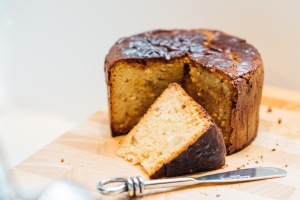
Hautecake by Sonnda Catto – The Negroni infused “Briottone” or “Panettoche” hybrid

So I know this is significantly late and there is only one excuse and that is that me (Graeme), got married to that stunning woman whom I proposed too in March called Rachel Brand (Macdonald now) and Stuart was my best man so we have been out of action all weekend.  We had every intention of blogging etc but weddings keep you really busy, then ill in my case.

So below our friend Sonnda Catto (http://sonndacatto.co.uk/) created an amazing recipe for us.  Sonnda is an incredible Food consultant, nutritionalist, cake designer and patissiere (missing the proper French punctuation I know).

So we at Gin Club gave her all the stuff needed to craft a Negroni, some fine cocktail Gin (No.3 London), Punt-e-Mes and Campari.  Sonnda exchanged this booze for Panettone so a fair swap.

Below is the amazing recipe:

HCSC_8617_lo_b.jpg

Recipe development went something like this:

Orange and white chocolate are fab together. The bitter orange flavour from the negroni and peels is going to offset the richness coming from the chocolate, dough and nuts. And on those nuts, what nuts do I want to eat with a negroni? In Italy, I’d be served a little bowl of salted almonds alongside, but I want something richer here. Macadamias. So far so good. And it’s got a classy gin cocktail in there. What’s not to like??!!

Taking inspiration from both brioche and panettone, the dough bears a resemblance to each while not quite being either. Unlike any bread I’ve encountered before, the mixture is so liquid you literally pour it into the cake tin! But that contributes a wonderful moistness.

I want to call it “briottone” or “panettoche”. Since it has the same shape and orangey additions as the Italian classic, I’ve settled on panettoche.

This is great eaten on its own. But with a bit less chocolate, 50g say, I reckon it would go very well with a top-quality pâté as a posh starter, toasted brioche being a classic French accompaniment to pâté. Duck liver would be my first option; duck and orange being another classic combo, and also because the bitterness from the negroni and peels is going to work so well against the richness.

Let me know how you enjoyed eating it!

Makes 1x6inch round cake tin

Ingredients

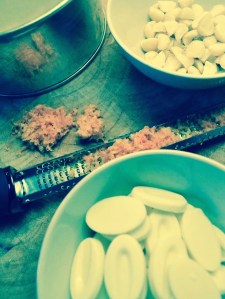
100g whole glacé orange peel, excess sugar rinsed off and diced fairly finely*

100ml Negroni (33ml each of gin, Punt e Mes** and Campari)***

10g fresh yeast (or 1¼ teaspoons dried)

125ml lukewarm water (not more than 30C)

250g strong white flour

15g caster sugar

1/2 level teaspoon salt

50g unsalted butter, at room temperature

1 whole medium egg, beaten

zest of 1 whole orange

50g macadamia nuts, quartered

100g best quality white choc you can get your hands on, chopped roughly (I use Valrhona Opalys – leave the pistoules whole so they don’t completely melt)

egg glaze made with 1 egg yolk beaten with 1 tablespoon water

Notes on specialist ingredients

Negroni+bread-3+of+8-lo

*This has a far better flavour than the diced mixed peel you get in tubs, fairly yukky stuff saturated in sugar syrup, which means it will absorb hardly any of the steeping alcohol. However, it’s not that easy to get hold of whole glacé peels these days. Try your best local health food shops and delis. Or order from Wholefoods online: Peel – Whole Orange 125g.

**Punt e Mes is an Italian red vermouth with a strong, distinctive flavor, half-way between regular rosso vermouth and Campari. It works better here because it’s drier and less sweet. If you can’t get hold of it, substitute with a regular red vermouth.

***Unless you’re a regular negroni drinker you’re unlikely to have Punt e Mes, any other red vermouth or Campari in your drinks cupboard. In which case, drop into a local pub or cocktail bar with a small tupperware tub. They’ll have no problem giving you a few measures to takeaway. Thanks to Paul from Epicures who did just that for me!

Method

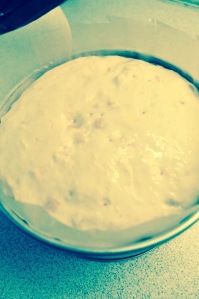
Soak the chopped glacé peel in the negroni. The aim here is to get as much of the alcohol into the fruit as possible, so soak for 24 hours at least. Longer if you’re not in any hurry.

This can actually be done days, even weeks, in advance; the peel is preserved and alcohol is a preservative. Just pop everything in a tupperware tub with a tightly fitting lid, or place in a small bowl and cover with cling film. Let the fruit soak up the alcohol at your leisure, and use whenever you’re in the mood to bake the loaf.

When you’re ready to make the bread, crumble the yeast into 100ml of the lukewarm water in a small jug/bowl. Leave for 5 minutes, then stir to dissolve.

Mix the sieved flour, sugar and salt together in a large bowl.

Make a well in the centre of the flour and add in the yeasted water.

Use a wooden spoon to draw enough of the flour into the yeasted water to form a soft paste. Cover the bowl with a tea towel, and leave to “sponge” until frothy and slightly risen, 20-30 minutes.

(NB: The sponge method adds a period of fermentation to mixing, resulting in a bread with a lighter crumb and a less yeasty flavour.)

Strain the excess negroni liquid from the glacé orange peel.

Combine 50ml of the strained negroni with the remaining 25ml water.

Mix in the flour from the sides of the bowl, gradually stirring in the 75ml negroni and water mixture. As the liquid is added, the texture of the combined ingredients will move from a crumbly mixture to a slightly sticky mass that will begin to come away from the sides of the bowl and form into a ball. The end result will be a soft, sticky dough.

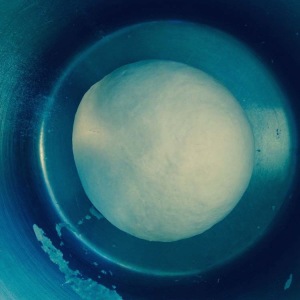
Turn the dough out on to a lightly floured work surface. Knead until soft, smooth, silky and elastic, about 10mins.

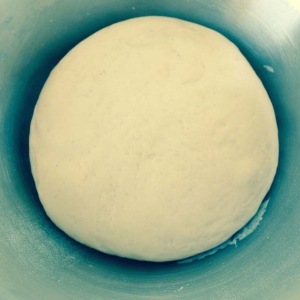
Return the dough to the large bowl and cover with a tea towel. Leave to rise until doubled in size, about 2 hours.

Negroni+bread-1+of+8-loNegroni+bread-2+of+8-lo

Grease a 6inch round cake tin (at least 3 inches tall) and line with silicon baking paper (aka baking parchment). If you only have greaseproof paper, brush the insides with melted butter (15g will do) or it will stick so fast you won’t be able to peel it away from the bread.

Knock back the dough, knead for 5 minutes, then leave to rest for 10 minutes.

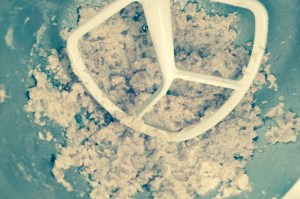
Meantime, place the soft butter in the bowl of an electric stand mixer. Add the strained peel and orange zest and beat with the paddle attachment until thoroughly combined. Gradually add the beaten egg and continue to mix until combined. At this point you’ll have a softish paste.

Negroni+bread-4+of+8-lo

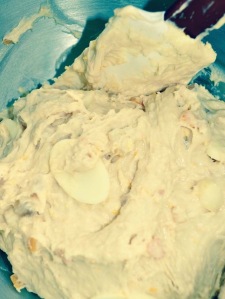
Next, add the remaining strained negroni and beat until combined. The mixture will now look like a thick cake batter. Finally, add in the chopped macadamia nuts and chunks of chocolate/whole pistoules. Mix briefly until just combined.

Remove the bowl from the stand mixer, and using a spatula fold the mixture to ensure the fruit, nuts and chocolate are evenly dispersed throughout.

Negroni+bread-5+of+8-lo

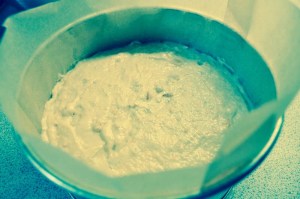
Pour the batter into the prepared tin and level the surface, pushing any visible chocolate chunks just below the surface to ensure they won’t burn.

Holding the tin a few inches above your work surface, drop it down. Repeat several times until the surface is completely level.

Negroni+bread-6+of+8-lo

Cover with a tea towel and leave to prove until the dough has doubled in size, about 2 and a half hours (check after 2 hours).

Negroni+bread-7+of+8-lo

Preheat the oven to 180C.

Using a soft pastry brush, brush the dough with the egg glaze. Be very gentle so as not to rip or deflate the dough. Also, be careful not to “glue” the loaf to the edge of the baking tin.

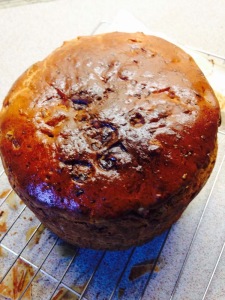
Bake for 45mins until the surface is glossy and a deep golden colour (think of the colour of brioche here). Check at 35 minutes, turning the tin 180 degrees to ensure even browning.

Turn out of the tin, place upside down on a baking sheet, peel away the lining papers and return to the oven for a further 10-20 minutes until hollow-sounding when tapped underneath – check after 10 minutes, giving another 10 minutes if need be.

Turn out of the tin onto a wire rack to cool.

Negroni+bread-8+of+8-lo

Best eaten within 1 day.

Gin Themed Baking – Scones (Aye Bake of is on)

So it is officially that time of year when the Great British Bake off is back on our screens (I know it is a bit late as it started last week), to celebrate this Graeme (that’s the person writing btw, who most of you know as Squirrel) and hopefully Kate (when she reads this) will be doing lots of Gin themed bakes.

Why would we do this?  Well we do host our main Gin events in the Hidden Lane Tea Room and they always have Gin themed cakes for you all to eat when you come along.  But mainly because Kate and myself have always been keen bakers, despite the fact that every Victoria Sponge I have ever made has failed to live up to my mothers.

So last week (btw there are no pictures as I hadn’t thought about doing this blog until late Tuesday night, while scanning through an old Delia Smith cook book) after the Bake off I thought “oh yeah, I make a mean Madeira Cake” so I did.  However I added more lemon juice than normal then using some spare No.3 London gin I made a Gin and sugar syrup glaze then topped it off with candied lemon slices.  Yes it was pretty great (or Doss, if readying the Perthshire area).

So this week to keep in with the Gin theme (however completely ignoring the theme of this week’s bake off which  was biscuits) I decided to make some Gin themed scones.

Starting off with a tradition scone mixture, but with a bit more butter than most recipes say I cracked on with a basic scone mixture.

Using:

500g (sometimes more sometimes less) Self Raising flour or Plain Flower (just over a pound in real money) – I find that using plain flower and 5 teaspoons of baking powder gives better results.

100g (4oz) none salted butter (at room temperature)

80g (3oz) caster sugar

Walnuts (as many as you like)

Dried fruit (Raisins or dates)

A whole zested lemon

2 eggs (make then as ethically sourced as your head allows or not)

2 tsps baking powder

Then milk (usually 250ml) but you won’t use all of it.

Method:

Firstly fire on the oven to 200 degrees

Sift most of the flour into a decent bowl, not all though you want for tweeking your mix come the end.  Then in lovely wee cubes add the butter.

Sticking your hands in the bowl, rub the flour and butter together until all the butter has mixed in.  They say in cookbooks until it looks like breadcrumbs. It never looks like breadcrumbs, it just gets slightly darker and can be clumped together.  The main thing is though that there shouldn’t be any lumps of just butter.

Then sift in your sugar and mix gently, flowed by the baking power.

Gather your dried fruit and nuts and chop finely, try to get things a bit even and a few millimetres in size.  The larger the fruit the more it sinks in mixture and the les even the dispersion of fruit and nuts will be in the scone.  Mix the fruit and nuts to the dry mixture.

Make a little well in the bottom of the bowl and crack in two eggs.  Then using a butter knife (no idea the logic of the knife, my mother always told me this was the way it had to be done) mix the eggs into the dry mixture until the moisture of the eggs vanishes.

Grab your milk and pour half of your 250ml in and mix with knife.  Soon it will be absorbed by the dry ingredients.  Now get your hands in there and mix it all together.  If it’s too dry and the flower isn’t forming together then add more milk.  Keep doing this until you have dough.  Sometimes you might add too much milk and the dough becomes sticky, that’s fine just throw in flour until stops being sticky.  Your dough will have the right mix once it stops sticking to your hands and the bowl.  Just knead it for it about until everything is mixed.

Dust the worktop and plant the dough on it.  Don’t drop it or you will knock the air from it.  Then gently roll it out (in any shape) so it is an inch thick.

Using a cutter, wine glass or cup, cut out some shapes and place on a buttered then dusted with flour baking try.  Make sure these are clean cut, it allows them to rise better.  Let them sit for a few minutes to let the baking powder do some work to the dough.

Once all cut, get a brush and coat the top with milk.  Then sprinkle a little sugar on them and finally place the lemon zest on them.

Fire in the oven for 15-20 minutes, they should have risen and gone golden brown.

Fire on a cooling try and then serve them look warm.

Scones should be eaten the same day or the day just after.

I served mine with home make Sloe Gin, Raspberry and Black current Jam.  Yum.

Scones Sloe Gin Jam

July’s Gin Club

Firstly, can I just start by apologising for typing this later than expected, we at Gin Club like the blog posts going out at 3pm on a Wednesday, which according to the Google Machine is the best time to post anything to Social Media.  I general find that it isn’t the timing that causes a difference but more the content.  Cake and Gin seem to do better than anything else so we are winning this race already.

Last week we had a double bill of Gin Club, in that we ran two events.  The first was our July dedicated Brand event and was all about No.3 London Dry Gin.  Anyone reading this regularly (this is where I question you all for reading these ramblings) will know that we have worked with No.3 London and several occasions.  It was featured at our first Gin Club then again at our 1st Birthday Party and it was also the first time we did a dedicated Gin free event.

This time round though we teamed up with a new Eyewear store (store is very American I apologise) called IOLLA Eyewear, which is in deepest darkest Finnieston.  At first I had no Idea what an Eyewear store was, I kept calling it an opticians and saying “look at these glasses” where I was corrected and then eventually started saying eyewear.  I am now a convert to this shop though; they even found glasses for my football shaped head and Macdonald cheeks.

Amanda Baxter from Berry Brothers & Rudd came up from London to give the 30 odd guests a brand masterclass on No.3 London.  Going through the history of Gin, Gin in London, the Berry Bros & Rudd Brand then specialising in on what makes up what we regard as one of the best Cocktail Gins on the market No.3 London Dry Gin.

In between all these talks, Stuart and I were handing out classic G&T’s, then neat tastes (cracking jokes back glasses for drinks and putting glasses next to reading glasses – classic dad humour), an alternative G&T which was Lemon Grass and Coriander, then to break up the Gin madness we served old fashioned Gin Fizz cocktails.

I really want to say thanks to Amanda, Claire, the folks at IOLLA Eyewear, the guests, Stella the dog and Betty and Bee for making it a great night with us. #IOLLAxNo.3

Then on Friday the 31st July (yes summer has officially ended – not that it began) we hosted our regular end of the month Gin Club event in the Hidden Lane Tea Room.

So July has been a wet month and something we have notice has really affected Gin Club goers, it seems not many people want to do much when it’s miserable outside and you never know if it’s going to rain.  But we did get a fair few of you out to drink the best spirit on the planet.

We decided to shake things up a bit this month and move the bar to front room in the Tea Room which I can safely say is the smartest thing we have done.  It even meant people sneaky neat tastes for those waiting for the loo.

Our first Gin for the evening (remember these come in no form of order you can bring the GinMe to the bar and chose anyone) was Shetland Reel.  I can safely say I was thrilled to be featuring this Gin and have Stuart the master distiller there to chat about it.  I have been trying to get Shetland Reel at Gin Club all year and finally it arrived.

Shetland Reel comes from Unst, which is part of the Shetland Islands. The Shetland Distillery Company was created by four people sharing a passion for producing top quality products in local communities. Frank / Debbie Strang and Stuart / Wilma Nickerson.  The gin uses 8 botanicals including locally grown apple mint.  On the nose there is a strong hit of Juniper and coriander, with fresh floral notes. To try it neat it is dry with a juniper spine and a clean dry bite.  This then becomes smoother and sweeter.

The more you drink the fruitiness builds making it a wonderful Gin, a truly loved product with of course a decent solid Juniper taste (it is a Gin)

Along with neat serves (on the sly) we intended on doing G&T’s with Fever Tree and Raspberry, but Stuart convinced us to try Kiwi fruit.  No surprises he was right.

Our second Gin for the night (which technically isn’t a Gin) was Minus 33.  Minus 33 is crafted by scientist at the Locabev Laboratory in Rosyth and started out in the labs at Edinburgh Uni.  Yes this Gin is really made in a lab.  Minus 33 comes in at 33% so technically does not qualify as a London Dry Gin but It is a Juniper distilled spirit (which is also one of their taglines).

After 3 years and 539 test tubes of experimentation Locabev decided that the optimum strength for a really smooth spirit was 33%.  This also makes it the perfect drink for those on a diet as that makes it just 46 calories per serve.

To taste Minus 33 it is fresh and floral with hints of juniper, citrus, lavender, elderflower and angelica. For the serve we were going to be using lemon and coriander but again the distiller Sam convinced us otherwise and we used dried Hibiscus.  Sam even used our old bar space to create a small lab which he served Minus 33 cocktails in beakers.

Then we had Diplôme.  Diplôme is created in Dijon and has been created roughly the same way since 1945; however the recipe was perfected during WW2.  After the end of the war, Diplôme Dry Gin became the official gin for the American Army stationed throughout Europe.

Using botanicals sourced from Europe and Morocco, Diplôme Dry Gin is made up of; Juniper (it is a Gin), coriander, whole lemons, orange peel, angelica, saffron, orris root and fennel seed.

On the nose of Diplôme gives a slight smell of cherry trees and cloves, you also get the Juniper and Coriander.

To taste you get the natural hit of Juniper (it is a Gin) but it also has zesty citrus fruit, slightly nutty and possibly lavender.  I have heard people say it almost feels oily.  I haven’t got that however I stress that we at Gin Club tend not to be wearing Tweed waist coats, while doing tastings and try to thing how the Gin will work and how it will be enjoyed. Which we served as a classic G&T with Fever Tree, garnished with Grapefruit

Our last Gin for the month was Sipsmith.  Sipsmiths is an old fav of ours which we would rave about all day if we could.  Sipsmith’s was launched by Sam Galsworthy, Fairfax Hall and Jared Brown to pursue their passion for handmade spirits.

Sipsmith is made using ten botanicals: Macedonian juniper berries, Bulgarian coriander seed, French angelica root, Spanish liquorice root, Italian orris root, Spanish ground almond, Chinese cassia bark, Madagascan cinnamon, Seville orange peel and Spanish lemon peel.

Each botanical plays its part however a few liquorice, coriander and angelica play distinctive roles.  To taste Sipsmith has strong notes of juniper but there are also definite citrus notes and a depth to the liquid that lingers.

Thanks to all of you for braving the weather and coming along.

The next one is the 28th August.  Get your tickets from Ticketweb.

Thanks

Graeme